Portage County Auditor Tax Rate reflects the total millage applied to a property’s assessed value within its tax district. Property tax rates in Portage County vary by location, since each township, city, and school district approves different levies that shape the final tax bill. The real estate tax system in Ohio taxes residential property at 35% of market value, which becomes the taxable property value. Millage rates then apply to that assessed amount. One mill equals $1 for every $1,000 of taxable value. As a result, two similar homes may pay different amounts if they sit in different school districts. Tax districts combine county, township, school, and special levies into one effective tax rate that appears on the annual property tax statement.
The Portage County Auditor manages property valuation, maintains official records, and calculates taxable values for every parcel. The office conducts full reappraisals every six years and updates values during triennial reviews to reflect local market trends. After determining assessed value, the auditor applies approved millage rates for each tax district. Levies fund public schools, fire departments, road maintenance, libraries, and county services. Ohio law applies reduction factors to limit sudden tax spikes after property value increases, which affects the effective tax rate property owners actually pay. This structured system promotes fairness across neighborhoods and supports stable funding for community services funded through property taxes.
What Is the Portage County Tax Rate?
Portage County Tax Rate represents the total millage applied to a property’s taxable value within its local tax district. The final bill depends on levy rates approved by voters, school district funding needs, and whether the property sits in a city or township. In Portage County Auditor, property taxes combine county, school, municipal, and special district levies. The average countywide effective tax rate often ranges between 1.8% and 2.5% of market value, though actual bills vary by location. Since Ohio assesses residential property at 35% of market value, the effective tax rate reflects how millage translates into real dollars owed.
Average Countywide Tax Rate
Across the county, total millage commonly falls between 70 and 110 mills, depending on the tax district.
- 70 mills = $70 per $1,000 of taxable value
- 100 mills = $100 per $1,000 of taxable value
For example:
| Market Value | Taxable Value (35%) | 90 Mills Example | Estimated Annual Tax |
|---|---|---|---|
| $200,000 | $70,000 | 90 mills | $6,300 |
Range by Municipality
Tax rates differ across cities, villages, and townships. Properties located in cities like Kent or Ravenna often carry higher total millage compared to rural townships. City residents may pay more since municipal levies fund police, road repair, and local services. Township properties may show lower municipal levies, though strong school district levy support can increase total rates. As a result, two homes with the same value may face different annual tax bills.
School District Levy Impact
School funding represents the largest share of most property tax bills. In many Portage County tax districts, school district levy rates account for 60% or more of total millage. When voters approve new school levies, total millage rises. When levies expire or fail at the ballot, the total tax rate may decrease. Strong school funding often explains why certain districts show higher property tax rates than others.
City vs Township Rate Differences
City properties typically include:
- County levies
- School district levy
- Municipal levy
- Library levy
- Park or special service levies
This layered structure shapes the final Portage County Tax Rate applied to each parcel. Township properties may exclude city municipal levies, though they still include:
- County levies
- School district levy
- Township fire or EMS levy
- Library or special district levies
How to Search Portage County Tax Rate by Address or Parcel Number
Portage County Tax Rate can be searched online through the official property records system. The Portage County Auditor Tax Rate tool allows users to look up tax rate by address, parcel number, or owner name and view full levy rates, tax district, and effective tax rate details. Property owners in Portage County can access real-time data through the official auditor property search database. This property tax lookup system provides verified parcel data pulled directly from county tax records.
Portage County Tax Rate Search
Follow these steps carefully to complete a full millage rate search.
Open the Property Search
- Visit: https://www.portagecountyauditor.org
- Click on Search Real Estate Records
- Wait for the parcel search page to load
Choose Your Search Method
The auditor property search tool allows three main options:
- Search by Property Address
- Enter street number
- Enter street name
- Select municipality if prompted
- Click Search
- Search by Owner Name
- Enter last name first
- Add first name if needed
- Click Search
- Search by Parcel Number
- Enter the full parcel number
- Do not include spaces unless required
- Click Search
Select the Correct Property
After searching:
- A results list will appear
- Click on the correct parcel
- Open the full property details page
Review Key Property Tax Information
On the property summary page, review the following sections:
- Market Value – Auditor’s estimate of the property’s worth based on comparable sales data.
- Assessed Value – 35% of market value (Ohio residential assessment standard).
- Tax District Code – Identifies the property’s geographic tax zone.
- Voted Millage Rate – Total levy rates approved by voters within the district.
- Effective Tax Rate – Actual applied tax rate after statutory reduction factors.
- School District Levy Breakdown – Portion of property taxes allocated to school funding.
- Estimated Annual Tax – Total projected yearly property tax amount.
How to Interpret the Millage Rate
This number may differ slightly after state adjustment factors apply. One mill equals: $1 per $1,000 of taxable value
Example:
- Assessed value: $70,000
- Total millage: 90 mills
- 70 × 90 = $6,300 annual tax
How to Confirm Your Tax District
Properties in Kent may show different municipal levy rates compared to properties in Ravenna. Local voter-approved levies create these differences. Scroll to the Tax District section of the parcel page.
Your tax district determines:
- Township or city rate
- School district levy
- Fire and EMS levies
- Library levies
- Special improvement levies
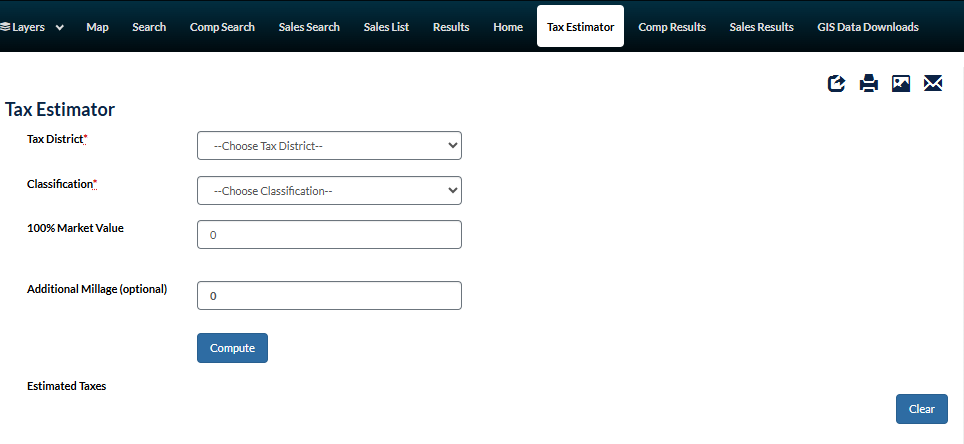
Portage County Millage Rates
Millage rates determine how much property tax a homeowner pays per $1,000 of taxable value and directly affect the savings available through programs such as the homestead exemption. In simple terms, 1 mill equals $1 in tax for every $1,000 of assessed property value within a tax district. In Portage County, total tax district millage combines school, county, township, and special levies. These combined levy rates create the full property tax bill shown on the annual statement. Since Ohio assesses residential property at 35% of market value, millage applies only to that reduced taxable amount, not the full market price.
What Does “Tax Per $1,000 Value” Mean?
The phrase tax per $1,000 value explains how levy calculation works in clear numbers. Each mill represents $1 in tax for every $1,000 of assessed value. This structure keeps calculations consistent across all tax districts. Property owners can estimate taxes by multiplying assessed value (in thousands) by the total millage rate. Even a small increase of 5 mills can noticeably raise annual taxes on higher-valued homes.
Example Calculation:
- Market value: $200,000
- Assessed value (35%): $70,000
- Total millage: 90 mills
70 × 90 = $6,300 annual property tax
Each additional mill in this example adds $70 per year.
Voted Millage vs Inside Millage
Ohio law separates millage into inside millage and voted millage, and both appear within tax district millage totals. Inside millage does not require voter approval and is capped at 10 mills. It supports basic local government operations. Voted millage requires approval during elections and often funds schools, fire departments, and libraries. In most Portage County tax districts, voted levies make up the largest share of the total rate.
Inside Millage:
- Maximum of 10 mills
- Funds core county services
- Automatically applied
Voted Millage:
- Approved by residents
- Funds schools and public safety
- Can change after elections
Renewal Levies vs New Levies
Levies appear on ballots in different forms, and each type affects millage rates differently. A renewal levy continues an existing tax at the same millage rate. A replacement levy resets values and may increase effective taxes. A new levy adds extra mills to the tax district total. Property owners should review election results since new levies directly increase overall property tax rates.
- Renewal levy: maintains existing rate
- Replacement levy: adjusts valuation base
- New levy: increases total mills
Sample Millage Rates by District
Millage rates vary across municipalities and townships in Portage County. School district millage often represents the largest portion of total levy rates. City residents may pay higher municipal levies than rural township residents. Differences depend on voter-approved funding for schools, police, and emergency services. Below is a simplified illustration of possible ranges.
| Area | School Millage | Township/City | County & Special | Total Mills |
|---|---|---|---|---|
| Kent | 55–65 | 15–20 | 15–20 | 85–105 |
| Ravenna | 50–60 | 18–25 | 15–20 | 83–105 |
| Rural Township | 45–60 | 10–18 | 15–20 | 70–98 |
School District Millage
School district millage often accounts for 60% or more of a total property tax bill. These levies fund teacher salaries, transportation, building improvements, and classroom programs. A higher school levy significantly increases overall millage rates within that tax district. School funding needs often explain why neighboring areas show different tax totals.
Example:
- 60 mills on $70,000 assessed value
- 70 × 60 = $4,200 annually
Township Levy Examples
Township levies support local services such as fire protection, EMS response, and road maintenance. These levies vary by township and voter approval levels. Rural areas may have lower municipal levies but strong fire or EMS levies. Each township’s approved millage becomes part of the total tax district millage applied to properties. When combined with school and county levies, township millage completes the full property tax calculation.
Example:
- 15 mills on $70,000 assessed value
- 70 × 15 = $1,050 annually
Property Tax Districts & Boundaries
Tax district boundaries determine which levy rates apply to a property and directly affect Portage County property tax rates. In Portage County, each parcel falls within a defined tax district that combines school, county, municipal, and special service levies. Tax districts form based on geographic boundaries such as municipalities, townships, school districts, and special service areas. When these boundaries overlap, they create a unique tax code for each property. As a result, homes located just blocks apart may have different total millage rates. These boundary lines explain why Portage County property tax rates vary across communities.
How Tax Districts Shape Property Tax Rates
Tax districts are formed when multiple governing authorities overlap within a geographic area, and each authority sets its own voter-approved levy rates. The total millage equals the combined levies from the county, city or township, school district, library district, and fire or EMS services, creating the final effective tax rate on a property bill. Rates vary by municipality because each community approves different funding levels for services like police, parks, and roads. As a result, properties in Ravenna, Kent, Aurora, or Streetsboro may reflect different tax obligations based on local levy decisions.
School District Overlap
School district boundaries do not always match city limits. A property located in one municipality may belong to a different school district. Since school levies often represent the largest portion of total millage, this overlap significantly affects tax bills. Two homes within the same city could pay different taxes if assigned to different school districts. This occurs when district lines cross township or municipal borders.
Fire & EMS Levy Variations
Fire and EMS services may operate at the township or joint district level. Some areas fund emergency services through separate voted levies, while others rely on municipal funding sources. These variations create noticeable differences in tax district millage totals. Properties located within joint fire districts may see additional levy lines on their tax bill. Reviewing your tax district code helps determine whether dedicated emergency service levies apply to your parcel.
How the Portage County Auditor Determines Property Assessments
Portage County Auditor Tax Rate depends directly on how each property’s value is assessed. In Portage County, the county uses a 35% assessment ratio to convert market value into taxable value, which forms the base for property tax calculations. The Portage County Auditor determines property values through a structured appraisal system. The office studies real estate sales, neighborhood trends, property characteristics, and construction costs to assign an accurate appraised value. This process supports fairness across tax districts and keeps property taxes aligned with local market conditions.
The 35% Assessment Ratio
Ohio law sets a uniform assessment ratio of 35% for real property. This means property owners do not pay taxes on full market value. Instead, taxes apply to the taxable value, which equals 35% of the property’s estimated market value. The Portage County Auditor Tax Rate applies millage rates to this $87,500 taxable value. This structure keeps assessments consistent across all residential parcels in the county.
Example:
- Market value: $250,000
- Assessment ratio: 35%
- Taxable value: $87,500
Property Reassessment Cycle
During a full reappraisal, the auditor reviews neighborhood sales data, construction changes, demolitions, and property improvements. The triennial update adjusts values to reflect recent real estate trends without conducting a full physical review of every parcel. This cycle keeps taxable value aligned with current market value over time. Portage County follows a state-mandated property reassessment cycle:
- Sexennial reappraisal (every six years) – Full review of all property values
- Triennial update (every three years between reappraisals) – Market adjustment based on recent sales
The Reappraisal Process
Property owners receive updated valuation notices after reassessment. If a property owner believes the appraised value exceeds true market value, they may file a formal complaint with the county Board of Revision. The reappraisal process includes several steps:
- Sales Data Collection – The auditor analyzes recent arms-length sales across the county.
- Market Analysis – Appraisers study trends by neighborhood and property class.
- Value Modeling – Statistical models estimate market value for similar properties.
- Field Review – Staff may inspect properties with new construction or major changes.
- Final Value Assignment – Market value and taxable value are published.
Sales Comparison Method
If comparable homes sell at higher prices, assessed market values may increase during reassessment. If sales decline, values may adjust downward. This method reflects actual market behavior and supports accurate taxable value calculations. For residential property, the auditor primarily uses the sales comparison method. This approach compares a home to recently sold properties with similar features:
- Square footage
- Lot size
- Age and condition
- Location
- Improvements
Commercial vs Residential Assessment Differences
Residential properties rely heavily on comparable home sales. Commercial properties follow a more complex valuation process. Commercial market value often depends on business income potential rather than simple square footage. As a result, assessment changes can vary significantly between residential and commercial parcels. The auditor may use:
- Income approach – Based on rental income and operating expenses
- Cost approach – Based on replacement cost minus depreciation
- Sales comparison – When comparable commercial sales exist
How to Calculate Your Portage County Property Tax Bill
Tax bill calculation in Portage County follows a structured formula used by the county each year. Every property owner pays taxes based on assessed value and local millage rates. The effective tax rate reflects the real percentage of market value owed after state reduction factors apply. By following the same steps used by the county, homeowners can estimate their annual bill with confidence. The calculation process relies on data provided by the Portage County Auditor. The auditor determines market value, applies the 35% assessment ratio, and assigns taxable value. Then local millage rates apply to that taxable value. Finally, state adjustment factors lower certain voted levies to stabilize taxes. Each step plays a direct role in shaping the final property tax amount.
Determine Market Value
Market value represents the estimated selling price of a property in the current real estate market. The county updates this value during reappraisal and triennial cycles. Appraisers review neighborhood sales, housing trends, and property improvements. This value forms the starting point for all tax bill calculations. Homeowners can locate market value on the property record card or annual valuation notice. The figure reflects recent comparable sales in the area. If housing prices increase, market value may rise during reassessment. A higher market value leads to a higher taxable base.
Example:
Market Value = $240,000
Apply Assessment Ratio
Ohio law sets a uniform 35% assessment ratio for residential real estate. This rule keeps taxation consistent across all counties. Only a portion of market value becomes taxable value. The remaining 65% is not taxed directly. The formula is simple and consistent statewide. Multiply the market value by 35% to determine taxable value. This taxable value becomes the base for applying millage rates.
Example Calculation:
$240,000 × 0.35 = $84,000 taxable value
Apply Millage Rate
Millage rates determine the tax per $1,000 of taxable value. Each tax district sets a total millage based on county, school, township, and special levies. The total millage rate appears on the property tax statement. This number varies depending on location within the county. Assume your total tax district millage equals 95 mills. Convert taxable value into thousands before multiplying.
$84,000 ÷ 1,000 = 84
84 × 95 = $7,980
Apply Reduction Factors
Ohio applies reduction factors to certain voted levies to prevent large revenue increases during reassessment years. These adjustments lower the effective tax rate on specific portions of the bill. The purpose is to keep tax growth more stable over time. Reduction factors do not remove levies but adjust their impact. This percentage shows the real share of market value paid in property taxes.
If a 5% overall reduction applies: $7,980 × 0.95 = $7,581 final estimated tax
Now calculate the effective tax rate relative to market value: $7,581 ÷ $240,000 = 3.15% effective tax rate
Breakdown of School District Levies in Portage County
A school district levy represents the largest portion of most property tax bills in Portage County. In many tax districts, school funding accounts for 60% or more of the total property tax rate. School levies fund daily operations, building improvements, debt payments, and special programs. Voters approve these levies during local elections. Once passed, they become part of the total millage applied to a property’s taxable value. Since schools rely heavily on property taxes, changes in school district levy rates significantly impact the overall tax rate.
Types of School District Levies
School districts use different levy structures depending on funding needs. Each type serves a specific purpose.
Permanent Improvement Levy
A permanent improvement levy funds long-term facility needs. This levy does not fund salaries or daily operations. It focuses strictly on capital improvements that protect and maintain school property. Schools use this money for:
- Building repairs
- Roof replacements
- Technology upgrades
- Safety improvements
Bond Levy
A bond levy repays debt issued for major construction projects. Districts often use bonds to build new schools or renovate aging buildings. Voters approve the bond amount and repayment period. Bond levies remain in place until the debt is fully paid. Once retired, that portion of millage may drop off the tax bill unless replaced by a new measure.
Emergency Levy
An emergency levy provides a fixed dollar amount for district operations. Unlike traditional millage, this levy generates a set revenue total rather than a fixed mill rate. If property values rise, the millage may adjust downward to maintain the approved funding amount. This structure stabilizes revenue while limiting unexpected increases tied to rising home values.
Renewal vs Replacement Levy
A replacement levy may increase taxes compared to a renewal, even if the stated millage appears similar. Homeowners should review ballot language carefully. Voters often see renewal and replacement levies on ballots.
- Renewal Levy – Continues an existing levy at the same millage rate
- Replacement Levy – Recalculates the levy based on updated property values
School Levy Impact on Total Tax Rate
School district millage forms the largest portion of the overall tax district rate. For example, if total millage equals 95 mills, schools may account for 55–65 mills of that amount. In districts such as Ravenna City School District and Kent City School District, voter-approved levies shape local property tax bills. A higher school levy directly raises the effective tax rate applied to assessed value.
Example:
- Assessed value: $80,000
- School millage: 60 mills
- 80 × 60 = $4,800 toward school funding alone
- If the total tax bill equals $7,500, then roughly 64% goes to schools.
Effective Tax Rate vs Millage Rate
The effective tax rate represents the actual percentage of market value a property owner pays after state-required adjustments are applied. It often differs from the voted millage rate, which reflects the approved tax per $1,000 of taxable value. State-mandated reductions can lower certain levies, resulting in a final tax amount that is less than the ballot-approved rate. Both figures appear in county tax records, and understanding the distinction helps property owners estimate their tax bills more accurately.
Why the Effective Rate Is Lower Than Voted Millage
Voted millage remains fixed once approved by taxpayers. Still, property values change during reassessment cycles. Without safeguards, rising home values would cause large tax increases. Ohio applies reduction factors to limit this automatic growth in revenue. Tax reduction factors lower the effective millage on certain levies. In many cases, the state also applies rollback credits that further reduce the final payable amount. These adjustments keep tax bills more stable over time, even if property values rise significantly.
How Tax Reduction Factors & Rollback Credits Work
Reduction factors adjust voted levies downward after property values increase countywide. This prevents local governments from collecting more revenue than originally approved by voters. The effective tax rate becomes lower than the stated millage rate due to these adjustments. Rollback credits reduce the homeowner’s share on qualifying levies. These credits appear directly on the tax bill. Together, reduction factors and rollback credits lower the final tax impact without changing the official voted millage.
Example Calculation
Assume:
- Voted millage: 100 mills
- Taxable value: $80,000
Initial calculation:
80 × 100 = $8,000
If a 6% reduction factor applies: $8,000 × 0.94 = $7,520
The effective tax rate now reflects the adjusted amount rather than the full 100 mills.
Portage County Tax Payment & Due Dates
Property tax payments in Portage County are processed by the Portage County Treasurer. The Treasurer collects taxes, tracks installment deadlines, and manages delinquent accounts. Staying aware of due dates prevents added penalties and interest. This section outlines payment schedules and available options. Property owners receive official tax bills before each installment due date. Mortgage companies often handle payments for escrow accounts. Those paying directly must follow the Treasurer’s schedule carefully to avoid extra charges.
Payment Deadlines & Installments
Portage County typically divides property taxes into two installments each year. The first half payment is generally due in late February. The second half installment is usually due in late July. Exact dates may vary slightly from year to year. Property owners should confirm deadlines listed on their current tax bill. Paying early can help avoid last-minute issues or mailing delays.
Late Penalties, Interest & Payment Options
If property taxes are not paid by the deadline, penalties apply to the unpaid balance, and interest may accrue over time. Continued nonpayment can result in a tax lien and collection procedures handled by the Portage County Treasurer. Paying installments on time helps avoid added financial strain. The Treasurer offers multiple payment options for convenience, including an online payment portal, mail-in check or money order, in-person payments at the office, and a secure drop box service. Official website: https://www.portagecounty-oh.gov/treasurer
How to Appeal Your Property Assessment
A property valuation appeal allows homeowners to challenge an assessed value they believe exceeds current market value. In Portage County, complaints are filed with the Portage County Board of Revision to ensure fair taxation. Because property taxes are based on assessed value, even small adjustments can lower annual bills. Appeals address market value accuracy as of the tax lien date, not millage rates.
Filing Deadline
Property owners must file an appeal with the Portage County Board of Revision within the official complaint window. In Ohio, this period typically runs from January 1 through March 31 following the tax year under review. Missing the deadline usually means waiting until the next eligible filing year. Property owners should confirm exact dates on the county auditor or Board of Revision website each year.
Hearing Process
After filing, the Board of Revision schedules a hearing. The property owner may present evidence in person or submit written documentation. School district representatives may attend if the appeal affects district revenue. After review, the board issues a written decision. If either party disagrees, further appeal may proceed to the Ohio Board of Tax Appeals.
The board reviews:
- Submitted evidence
- County appraisal records
- Comparable sales data
Historical Portage County Tax Rate Trends
Historical millage rates show how local tax rates have changed over time. Reviewing tax rate changes and levy history helps property owners see long-term funding patterns across Portage County. Over the past 5–10 years, total millage in many tax districts has remained relatively stable, with gradual adjustments tied to voter-approved levies. While market values fluctuate, reduction factors often balance revenue growth. Major changes usually occur after new school levies or bond measures pass.
5–10 Year Millage Trend
| Year | Avg. Total Millage | Notable Levy Activity |
|---|---|---|
| 2016 | 82 mills | School renewal levy |
| 2018 | 85 mills | New emergency levy |
| 2020 | 87 mills | Bond levy approved |
| 2022 | 90 mills | Replacement levy |
| 2024 | 92 mills | Fire/EMS levy added |
| 2025 | 94 mills | School improvement levy renewal |
| 2026 | 95 mills | Public safety services levy increase |
Role of Voter-Approved Levies
Property tax rates change primarily due to voter-approved levies and local funding measures. When new levies pass, total millage increases; when levies expire without renewal, rates may decrease. Replacement levies can reset effective taxation levels following reassessment. Monitoring historical millage trends helps homeowners anticipate future adjustments tied to ballot initiatives and community needs. Common sources of rate changes include school district levies, construction bond issues, fire and EMS funding, and library or special improvement levies.
Frequently Asked Questions
Property taxes in Portage County generate common questions from homeowners, buyers, and investors because bills are influenced by assessment ratios, levies, and tax district boundaries. Even small changes can affect annual payments. This FAQ section provides clear, structured answers focused on practical understanding rather than technical language. For official figures and account-specific details, property owners should confirm information through the Portage County Auditor or Treasurer’s website.
What is the current Portage County tax rate?
The current tax rate in Portage County is not a single fixed percentage because property taxes are determined by tax district. Each district combines county, municipal or township, school, and special levies, resulting in different total millage rates. In many areas, total voted millage ranges roughly between 80 and 95 mills before state reduction factors are applied. However, the effective tax rate is lower due to Ohio tax rollback laws. Property owners can find their exact rate on their semiannual tax bill or by searching their parcel on the county auditor’s website. Rates may change when voters approve new levies, renew existing levies, or when reassessment cycles adjust property values across the county.
How do I find my tax district?
Your tax district is based on your property’s physical location within overlapping jurisdictions such as township or city boundaries, school district lines, and special levy areas. Each unique combination forms a specific tax district number used for billing and rate calculation. To find your district, visit the Portage County Auditor’s property search portal and enter your address or parcel number. The property details page will list the assigned tax district along with millage information. Tax districts matter because two homes in different school districts may have noticeably different tax bills even if their market values are similar. Always verify district information when purchasing property or estimating future taxes.
How is the effective tax rate calculated?
The effective tax rate is calculated after applying Ohio’s state-mandated tax reduction factors to the total voted millage. Voters approve millage rates for schools, county services, and local levies, but House Bill 920 prevents taxing authorities from automatically collecting more revenue solely due to rising property values. First, the total voted millage for your tax district is determined. Then, reduction factors are applied to adjust the rate downward. Finally, the adjusted millage is multiplied by your taxable value, which is 35% of market value in Ohio. The result is divided by 1,000 to determine your property tax. This system keeps revenue relatively stable despite reassessment-driven value increases.
Why did my tax bill increase?
A property tax bill may increase for several reasons, even if millage rates remain unchanged. The most common cause is a rise in your property’s appraised market value during a reappraisal or triennial update cycle. Since taxes are based on assessed value (35% of market value in Ohio), higher valuations result in higher taxable amounts. Another reason could be voter-approved new levies or replacement levies in your school district or municipality. Changes in reduction factors can also slightly alter effective rates. Additionally, improvements to your property — such as additions, renovations, or new construction — can raise assessed value. Reviewing your property record helps identify the exact cause of any increase.
What is the assessment ratio in Portage County?
The assessment ratio in Portage County follows Ohio law, which sets real property assessment at 35% of market value. This means if your home’s appraised market value is $200,000, the taxable value will be $70,000 before millage is applied. The assessment ratio ensures uniformity across the state so properties are taxed consistently relative to their true market value. County auditors determine market value through sales comparisons, property characteristics, and periodic reappraisals. The 35% ratio does not change based on tax district; it applies uniformly to residential and commercial real estate, although valuation methods may differ by property type.