Portage County Auditor Property Search serves as the county’s central property records database, giving users direct access to tax assessment records, parcel data, and ownership details. The system functions as a public county land information portal where homeowners, buyers, attorneys, and investors can review property information without cost. Users can search by owner name, parcel number, or property address to locate official records within seconds. Each listing typically includes assessed value, market value, tax amounts, sales history, and structural details. Since the information comes directly from the County Auditor’s office, it reflects official government records rather than third-party estimates. This makes the tool reliable for financial planning, due diligence, and legal research. By offering a structured parcel data system, the county supports transparency and informed property decisions across residential, commercial, and agricultural sectors.
Portage County Auditor Property Search also plays a key role in property tax search and valuation review. Property owners often use the system to check annual tax bills, confirm assessment values, and verify exemption status. Real estate professionals rely on it for real estate lookup tasks before listing or purchasing property. Attorneys review tax assessment records during probate cases, title checks, and estate settlements. Investors analyze parcel data, lot size, zoning classification, and prior sale prices before making purchase decisions. The property records database updates regularly, reflecting changes recorded by the county. This structured county land information portal improves clarity and public trust by making government property data available online. For anyone researching land ownership or reviewing tax information, this official parcel lookup system remains the primary and most dependable source within Portage County.
What Is the Portage County Auditor Property Search?
Portage County Auditor Property Search is the official online ownership database used to review parcel records, assessed values, and tax-related property details in Portage County. It operates as the county’s real estate assessment system and provides public access to verified valuation records. The system is managed by the Portage County Auditor, which serves as the county appraisal office. This office maintains detailed parcel records for every taxable property in the county. Each parcel receives a unique identification number that links to legal descriptions, land characteristics, and tax data. The Auditor tracks ownership changes after property sales, deed transfers, or legal filings. When a new deed is recorded, the ownership database updates to reflect the current owner. This process keeps property records accurate and publicly available. Clear recordkeeping supports buyers, sellers, and legal professionals who rely on up-to-date information.
Role of the County Auditor in Property Records and Valuation
The County Auditor oversees property assessments and valuation records used for taxation. Through the assessed value lookup feature, users can review the taxable value assigned to both land and buildings. These values form the basis for calculating annual property taxes. The office reviews property sales, construction updates, demolitions, and market trends during assessment cycles. Staff members analyze data to maintain fair and consistent valuations across the county. This structured review process supports a balanced tax system. The Auditor works closely with the Treasurer and the Recorder. The Recorder maintains official documents such as deeds and mortgages. The Treasurer bills and collects property taxes based on the assessed values established by the Auditor. Together, these offices form a connected real estate assessment system.
Residents and professionals use the Portage County Auditor Property Search to:
- Confirm ownership history
- Review assessed values
- Check parcel classification
- Examine valuation records
- Verify tax-related property data
How to Use the Portage County Property Search URL
The Portage County Property Search URL allows users to complete a parcel number search, owner search, or property tax search through the county’s official system. Users can visit the official site directly at: https://portagecountyauditor.org
This online system works as the county’s public property database. It provides parcel details, ownership history, tax amounts, assessed values, building data, and sales records. The tool is free to use and open to the public. Below is a complete user guide that explains each search method and every major feature of the tool.
Open the Official Property Search Page
- Go to the official website: https://portagecountyauditor.org
- Click on the “Property Search” or “Real Estate Search” section.
- The search dashboard will appear with multiple search fields.
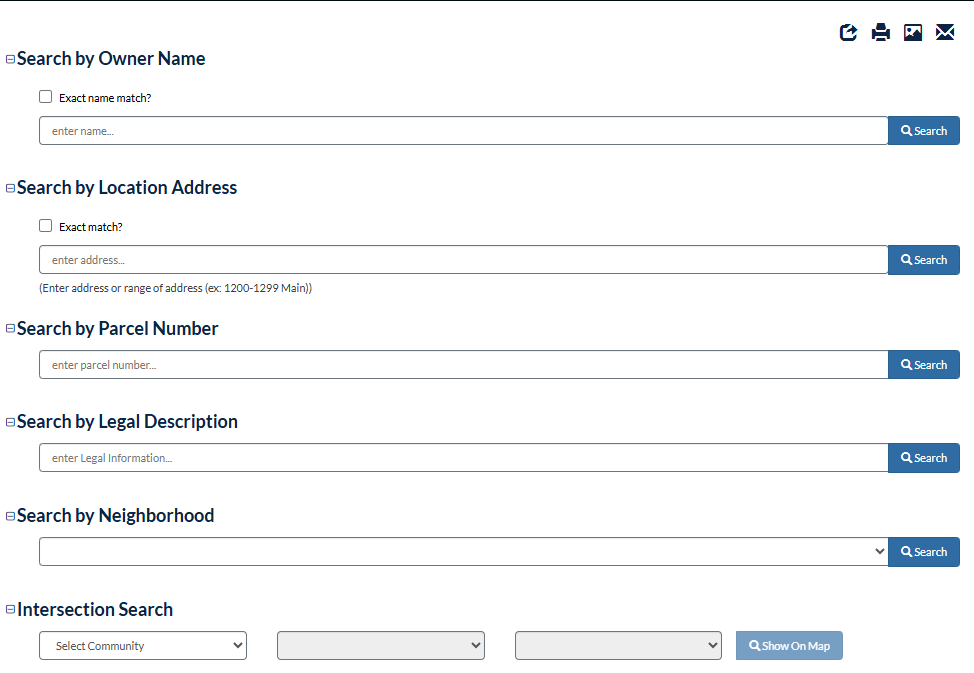
The main search screen typically includes:
- Owner Name field
- Parcel Number field
- Property Address field
- Search button
- Advanced search or filter options
Search by Owner Name
Property owner lookup and name-based property search.
Steps:
- Locate the Owner Name search box.
- Enter the last name first.
- Add the first name to narrow results.
- Click the Search button.
- Click on a parcel to open the full property profile.
Inside the Property Record:
- Ownership history
- Land and building assessed value lookup
- Property tax search results
- Sales history
- Legal description
- Tax district
Search by Parcel Number
Exact parcel ID lookup and tax parcel search.
Steps:
- Locate the Parcel Number field.
- Enter the full parcel ID exactly as listed on tax documents.
- Avoid extra spaces or missing digits.
- Click Search.
Results:
- The system pulls one exact property record.
- This method provides the fastest and most accurate result.
Search by Property Address
Users who know the street address but not the parcel ID.
Steps:
- Enter the street number.
- Type the street name.
- Leave off abbreviations if unsure.
- Click Search.
Results Page:
- Matching addresses will appear.
- Select the correct property from the list.
Property Profile Displays:
- Ownership database details
- Valuation records
- Tax assessment records
- Building size and year built
- Sales transfers
Filter & Advanced Search
This includes property database filters to refine results.
Advanced Search Features May Include:
- Property class (residential, commercial, agricultural)
- School district
- Tax district
- Sale date range
- Assessed value range
- Acreage size
How to Use Filters:
- Click “Advanced Search.”
- Select your desired filter criteria.
- Apply filters.
- Review narrowed results.
What Information You Can Find in the Property Search
The Portage County property search tool provides detailed land records access and a complete ownership database for each parcel. Users can perform an assessed value lookup and review tax, sales, and building information in one place. Each property profile contains structured real estate valuation data pulled from official county records. The system organizes data into clear sections, which makes it easy to review ownership, tax assessment history, and property characteristics without confusion. Below is a breakdown of the key information available inside a typical parcel record.
Owner Information & Parcel Details
The ownership database lists the current property owner and mailing address. This section confirms legal ownership and identifies where tax bills are sent. The Parcel ID works as the property’s unique tracking number within the county system. It connects all valuation records, tax assessment history, and deed history tied to that parcel. Accurate parcel details help prevent title errors and support reliable land records access.
You can view:
- Owner name
- Mailing address
- Parcel ID number
- Legal description
- Property location address
Assessed Value & Market Value
The assessed value lookup section shows how the county calculates taxable value for the property. Assessed value determines the portion used to calculate annual property taxes. Market value reflects an estimate of current selling price under typical market conditions. Reviewing both values helps users track real estate valuation data over time. Buyers and investors often compare current and past tax assessment history before making decisions.
You will typically see:
- Assessed land value
- Assessed building value
- Total assessed value
- Market value estimate
Property Classification & Tax District
Each parcel record includes a property class that identifies how the land is used. Classification impacts assessment rates and valuation methods. The tax district shows which local authorities apply millage rates to the parcel. These districts may include school systems, municipalities, or special service areas. Differences in tax districts explain why similar homes may have different tax amounts.
Common property classes include:
- Residential
- Commercial
- Agricultural
- Industrial
- Vacant land
Land & Acreage Information
Land records access includes detailed parcel size and land use data. This section outlines the physical characteristics of the property. Buyers use acreage and lot dimensions to evaluate space and development options. Subdivision data may reveal neighborhood layout or recorded plats. Land use designation helps determine zoning and permitted uses. Topography details may indicate whether the land is flat, wooded, or partially developed. Reviewing this information helps property owners assess building potential, agricultural use, or future improvement plans.
You may find:
- Total acreage
- Lot dimensions
- Land use designation
- Subdivision information
Building Details & Improvements
This real estate valuation data supports accurate property assessments. The building section outlines structural and improvement details used during valuation reviews. Construction features influence both assessed value and market value. Property characteristics help buyers compare homes and estimate renovation needs. Detailed improvement in property records strengthen the accuracy of the ownership database.
The property profile often includes:
- Year built
- Square footage
- Number of bedrooms and bathrooms
- Construction type
- Exterior materials
- Garage or additional structures
Sales History & Property Tax History
The deed history section lists recorded ownership transfers for the parcel. Each entry documents the transaction date and reported sale price. Instrument type identifies the legal form used to transfer ownership. Reviewing deed history supports clear title research and ownership verification. The property tax history section displays annual tax charges and prior year amounts. Users can review installment breakdowns and compare long-term tax assessment history. This information helps identify valuation changes and payment trends.
Portage County Property Tax Information
A property tax search in Portage County allows users to review their real estate tax bill, payment status, and prior year charges. The assessed value lookup connects taxable value directly to the final annual tax amount shown on the parcel record. Property taxes support schools, emergency services, public infrastructure, and local government operations. Each property owner contributes based on the assessed value assigned to their parcel. The county maintains transparent tax assessment history records so owners can track valuation changes over time. Reviewing tax data regularly helps property owners avoid surprises and plan financial decisions with clarity.
How Property Taxes Are Calculated
Property taxes follow a clear formula based on assessed value and the local millage rate. The assessed value represents the taxable portion of the property’s estimated market value. Local taxing authorities apply a millage rate to calculate the total real estate tax bill. This method keeps tax calculations uniform across all parcels in the county and supports consistent tax assessment history reporting.
The calculation works as follows: Assessed Value × Millage Rate = Annual Property Tax
A millage rate equals the tax amount charged per $1,000 of assessed value. If a home has an assessed value of $100,000 and the millage rate is 20 mills, the annual tax would equal $2,000. Property owners can verify these figures through the property tax search section inside their parcel profile.
For estimated calculations, the official tax estimator available at: https://beacon.schneidercorp.com/Application.aspx?AppID=1147&LayerID=30592&PageTypeID=2&PageID=12400
This online estimator allows users to input assessed value data and review projected tax amounts based on current millage rates. Reviewing these figures helps confirm billing accuracy and supports better financial planning.
Assessment Cycle
Portage County follows a scheduled assessment cycle to keep property values aligned with market conditions. During reappraisal periods, officials review sales data, construction updates, and structural improvements. Changes in property size or upgrades may influence the assessed value. Owners often notice valuation adjustments during these reassessment years. The assessed value lookup allows comparison between current and prior tax years. Tracking this tax assessment history helps explain increases or decreases in the real estate tax bill. Staying aware of the assessment cycle helps owners prepare for possible changes in annual taxes.
Tax Rates & Payment Deadlines
Tax rates differ by tax district and reflect local levies approved by voters. These districts may include school systems, municipalities, townships, or special service areas. Each district applies its own millage rate to determine tax obligations. This structure explains why two similar homes may carry different tax amounts. Property tax bills are issued in installments. Many counties divide payments into first-half and second-half due dates during the calendar year. Payment deadlines appear on the official billing statement and within the property tax payment portal. Late payments may result in added interest or penalties, so reviewing due dates early helps avoid extra costs.
Paying Your Property Taxes
The Portage County Treasurer manages the collection of all real estate tax payments. The Treasurer’s office processes payments, maintains tax balances, and posts updated payment status information. Property owners can review their real estate tax bill and confirm outstanding amounts online. Through the property tax payment portal, owners can check installment totals, verify past payments, and complete secure transactions. Using both the assessed value lookup and the Treasurer’s payment system keeps tax records organized and current.
For official payment services, visit: https://www.portagecounty-oh.gov/portage-county-treasurer
Assessed Value vs Market Value
An assessed value lookup shows the taxable amount assigned to a property for property tax calculation. Market value reflects the estimated selling price of the property under normal real estate conditions. Many property owners see both numbers in their parcel record and assume they mean the same thing. In reality, each figure serves a different role in the real estate assessment system. Assessed value impacts tax bills, and market value influences buying and selling decisions. Reviewing both figures side by side helps clarify why tax amounts may differ from listing prices. A clear comparison supports better financial planning and informed property decisions.
Assessed Value
Assessed value represents the amount the county assigns to a property for taxation purposes. The county appraisal office reviews sales data, property improvements, land size, and building characteristics during scheduled assessment cycles. After review, officials determine a value that becomes the basis for tax calculations. This value does not always match the property’s selling price. Many states apply an assessment ratio, which means assessed value reflects only a portion of the market value. Property owners can confirm this number through the assessed value lookup feature in the property search tool. Any increase or decrease in assessed value directly affects the annual real estate tax bill. Monitoring changes each year helps owners anticipate tax adjustments.
Assessed Value Includes:
- Land value assigned for taxation
- Building or improvement value
- Total taxable assessment
- Adjustments based on assessment cycles
- Changes that directly impact annual taxes
Market Value
Market value estimates how much a property would likely sell for in an open and competitive market. It reflects location, condition, buyer demand, and recent comparable sales. Real estate agents and appraisers often use comparable property sales to estimate this figure. Market value may change more frequently than assessed value. Housing trends, neighborhood growth, or economic shifts can influence price estimates. Buyers rely on market value during purchase negotiations and financing approvals. Although market value does not directly determine property taxes, it often influences reassessment decisions during valuation updates.
Market Value Factors:
- Recent comparable property sales
- Location and neighborhood demand
- Property condition and upgrades
- Economic and housing trends
- Buyer competition in the area
Taxable Value
Taxable value represents the final amount used to calculate property taxes after adjustments. In some cases, exemptions such as homestead reductions lower the assessed value before taxes apply. The reduced figure becomes the taxable value. For example, a property may have a market value of $200,000 and an assessed value of $70,000. If an exemption reduces the taxable portion to $65,000, taxes apply only to that lower figure. This structure protects eligible property owners from higher tax burdens. Reviewing taxable value inside the parcel record helps clarify the exact amount used for the property tax search calculation.
Taxable Value May Reflect:
- Assessed value after exemptions
- Homestead or other tax reductions
- Final amount used in tax formula
- Adjusted value shown on the tax bill
- Figure multiplied by the millage rate
Land Records & Deed Access in Portage County
Land records access in Portage County allows users to review official deed documents, mortgage filings, and recorded liens. A real estate lookup often begins with the property search tool and continues through the Recorder’s office for full document copies. Land records provide legal proof of ownership and property transfers. These records document every change tied to a parcel, including sales, refinancing, and legal claims. Buyers, attorneys, lenders, and title companies rely on accurate land records to confirm clear ownership. Reviewing these documents helps prevent disputes and supports secure real estate transactions. Public record systems keep property history transparent and organized for long-term reference.
Deed Records
Deed records show the legal transfer of property from one owner to another. Each recorded deed includes the grantor (seller) and grantee (buyer), legal description, parcel number, and date of transfer. This document forms the foundation of the ownership database. Deed history helps verify chain of title, which confirms continuous ownership over time. Reviewing past deed entries can reveal previous transfers, shared ownership interests, or estate-related changes. A real estate lookup often references deed records to confirm accurate parcel information. These documents protect both buyers and sellers during transactions.
Mortgage Filings
Mortgage filings record loans secured against a property. When a homeowner finances a purchase or refinances, the lender records a mortgage document with the county. This filing creates a public record of the lien placed on the property. Mortgage documents include lender details, loan amounts, and recording dates. Reviewing mortgage filings helps determine whether a property has active financial obligations. Title professionals often examine these records during closing to verify loan releases or outstanding balances. Accurate land records access supports financial transparency.
Liens & Other Recorded Documents
Liens represent legal claims against a property for unpaid debts, taxes, or court judgments. These filings may include tax liens, mechanic’s liens, or judgment liens. Recording a lien provides public notice of the claim. Other recorded documents may include easements, affidavits, plats, or property boundary adjustments. Each filing becomes part of the official parcel record. Users who need certified copies or full document images can request them through the Portage County Recorder. The Recorder maintains and preserves these documents as part of the county’s permanent land record system. Reviewing deed records, mortgages, and liens provides a complete legal picture of any property in Portage County.
Frequently Asked Questions
Portage County property records often raise common questions about parcel searches, tax bills, and deed documents. Many users want quick answers before starting a real estate lookup. This FAQ section provides clear explanations based on the county’s public property system. Each answer explains key steps, available tools, and where to locate official data. These responses focus on assessed value lookup, ownership database searches, and land records access.
How do I search for a parcel number in Portage County?
To perform a parcel number search, visit the official county property search website and locate the Parcel ID field on the main search page. Enter the full parcel number exactly as it appears on tax documents, including dashes if required. Accurate formatting helps the system return the correct record without errors. Once submitted, the search results will display a detailed parcel profile. This profile typically includes ownership database information, assessed value lookup data, property classification, acreage, and building details. Users can also review sales history and tax assessment history from the same page. This method provides the fastest and most precise way to retrieve one specific property record within the county database.
How can I check property taxes online?
A property tax search can be completed through the county’s online property database. Users may search by owner name, parcel number, or property address to open the parcel profile. Once inside the record, the system displays annual tax amounts, installment breakdowns, and prior year tax history. The assessed value lookup section shows the taxable value used to calculate the real estate tax bill. Many parcel profiles include direct links to the property tax payment portal managed by the Treasurer’s office. This allows users to confirm balances, check payment status, and review billing details. Reviewing tax data online helps property owners stay informed about due dates and total obligations.
Is Portage County property search free to use?
Yes, the Portage County property records system is free for public use. Residents, buyers, attorneys, and investors can conduct a real estate lookup without paying subscription fees. The online database provides ownership details, parcel ID numbers, assessed value lookup results, property characteristics, and tax assessment history. Users can review sales transactions and valuation records directly from their computer or mobile device. While online searches are free, there may be a fee for certified document copies requested through the Recorder’s office. This open access structure supports transparency and allows anyone to verify property information before making financial or legal decisions.
How often are assessed values updated?
Assessed values update according to the county’s established assessment cycle. Reappraisals typically occur every few years to reflect local real estate trends, market sales, and property improvements. During these review periods, officials analyze recent transactions and construction changes. If a property has been renovated, expanded, or newly built, the assessed value may increase. Property owners can monitor these changes through the assessed value lookup feature within the parcel profile. Comparing current and prior year values helps explain differences in the real estate tax bill. Regular updates help maintain fair taxation across all parcels within the county.
Where can I find deed records in Portage County?
Deed records are available through the county’s land records access system managed by the Recorder’s office. Users can search by owner name, parcel number, or document reference to locate recorded deeds. Each deed entry includes the grantor and grantee names, transfer date, and legal property description. Reviewing deed history helps confirm chain of title and verify ownership transfers over time. Mortgage filings and lien documents may appear in the same database. Users who need official copies can request certified documents directly from the Recorder’s office. Access to these records supports secure real estate transactions and legal verification.
What information appears in a Portage County property record?
A Portage County property record includes detailed ownership database information and valuation data. Users can view the owner’s name, mailing address, parcel ID, legal description, and property classification. The record displays assessed land value, assessed building value, and total market value estimates. Property characteristics such as acreage, lot dimensions, building size, and year built typically appear in the profile. Sales history lists prior transfers, sale dates, and reported prices. The property tax search section shows annual tax amounts and installment history. This comprehensive data helps buyers, homeowners, and investors evaluate property trends and verify official records before completing transactions.