Portage County Auditor Homestead Exemption is a tax reduction program that lowers the taxable value of a qualifying owner-occupied property in Portage County. It provides property tax relief by removing up to $25,000 of a home’s market value under the Ohio homestead program, which reduces the final real estate tax bill. This benefit supports tax savings for seniors, disabled homeowners, and certain surviving spouses who meet state income limits. By lowering the property’s taxable value before rates apply, the exemption cuts annual tax costs in a clear and predictable way. Homeowners apply through the Portage County Auditor’s Office, which reviews eligibility and processes approved claims for the real estate tax credit. Qualified applicants receive continued savings as long as they remain eligible.
Portage County Auditor Homestead Exemption helps eligible residents remain in their homes by reducing the pressure of rising property taxes. Many seniors live on fixed incomes, and increases in home values can raise tax bills even if household income stays the same. This tax reduction program offsets that impact by lowering assessed value after the exemption amount is applied. Disabled homeowners benefit in similar ways, especially when medical or living costs strain monthly budgets. The program applies only to a primary residence, and applicants must own and occupy the property as of January 1 of the tax year. Income limits set by the state determine qualification for new applicants seeking ongoing property tax relief and long-term stability.
How the Homestead Exemption Works in Ohio
In Ohio, the homestead program provides a senior exemption and disability tax relief by reducing a home’s taxable value. The program removes up to $25,000 from a qualifying home’s market value, which lowers the property assessment used to calculate taxes. The homestead exemption follows rules set under Ohio tax law and is administered locally through the Portage County Auditor Office in coordination with the Ohio Department of Taxation. Instead of sending a refund, the state applies a taxable value reduction directly to the home’s assessed amount.
The $25,000 Taxable Value Reduction
Ohio calculates property taxes using a valuation formula. First, the county determines a home’s market value based on sales data and property characteristics. Next, the assessed value equals 35% of the market value. When a homeowner qualifies for the senior exemption or disability tax relief, up to $25,000 is deducted from the market value before assessment. The difference in assessed value directly lowers the property tax bill. The exact savings depend on local millage rates, which vary by school district and township.
Example:
- Market value: $180,000
- Homestead reduction: $25,000
- Adjusted market value: $155,000
- Assessed value (35%): $54,250 instead of $63,000
How Property Assessment Impacts Your Tax Bill
Property assessment plays a central role in calculating taxes. Once the county sets the assessed value, local tax rates apply to that amount. Lower assessed value means lower taxes. This system benefits homeowners who meet eligibility rules under Ohio tax law. Seniors age 65 or older and permanently disabled homeowners can qualify if their household income falls below the state threshold. The exemption applies only to an owner-occupied primary residence. Unlike temporary credits, this reduction continues each year as long as the homeowner remains eligible. That steady taxable value reduction provides predictable savings.
Why the Senior Exemption and Disability Tax Relief are important?
Property values can rise over time, which increases tax bills. Many seniors rely on retirement income that does not increase at the same pace. The senior exemption helps control tax growth by lowering the base value subject to tax. Disability tax relief serves a similar purpose. Homeowners with permanent disabilities often face medical costs and limited earning capacity. Reducing taxable value helps protect long-term housing stability. Through coordination between the Ohio Department of Taxation and the Portage County Auditor’s Office, the homestead program applies a clear valuation formula. The $25,000 value reduction may seem modest, yet over several years it can produce meaningful tax savings and help eligible homeowners remain in their homes with greater financial confidence.
How to Search Portage County Homestead Exemption Records
Portage County Auditor Homestead Exemption search allows property owners to confirm whether a home receives the senior exemption or disability tax relief. Residents can complete a property tax exemption lookup online through the Portage County Auditor’s Office using the official real estate database. Homeowners in Portage County can check homestead status using a parcel number search, property owner name lookup, or by reviewing the tax bill exemption line item.
Official property search portal URL: https://www.portagecountyauditor.org
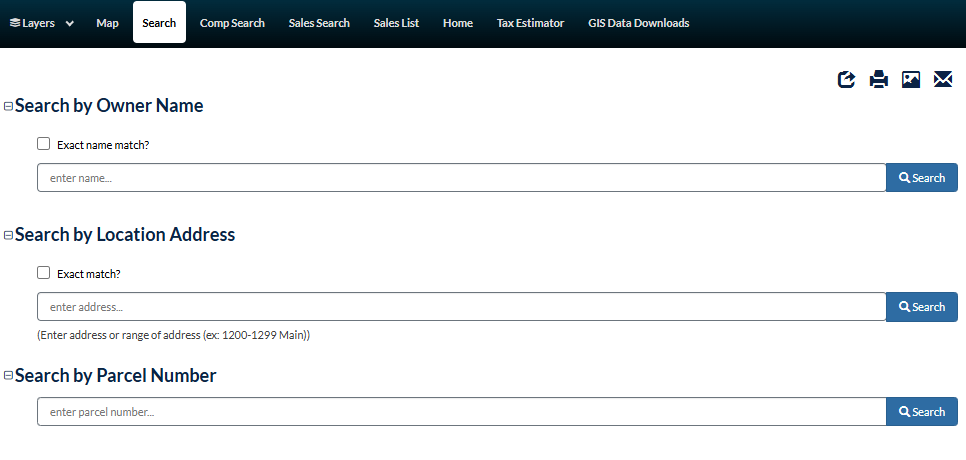
Search by Property Owner Name
- This method works best when the parcel number is not available.
- Open the official website: Go to: https://www.portagecountyauditor.org
- Click on “Property Search” or “Real Estate Search”. This opens the county’s real estate database.
- Select “Search by Owner Name”. Enter the full last name. A partial name works if spelling is uncertain.
- Review the results list. Click the correct property address.
- Open the Tax Details section. Scroll to the valuation and tax breakdown area.
- Locate the Homestead line item. Look for:
- “Homestead Exemption”
- “Homestead Reduction”
- Reduced taxable value amount
Search by Parcel Number
A parcel number search gives exact results and avoids name confusion. This page confirms exemption verification status.
- Find the parcel number. Locate it on:
- Annual property tax bill
- Valuation notice
- Prior deed record
- Visit the Auditor property portal: https://www.portagecountyauditor.org
- Select Advanced Search or Parcel Search
- Enter the full parcel ID exactly as printed
- Review property assessment page
- Check:
- Market value
- Assessed value (35%)
- Homestead exemption deduction
- Taxable value reduction
Check Homestead Status on the Tax Bill
Homeowners can confirm exemption without going online. The savings appear as a lower taxable value before millage rates apply. Comparing prior and current bills helps confirm continued eligibility. Look at the printed or digital tax bill and review:
- Taxable Value Before Reduction
- Homestead Exemption Line
- Adjusted Taxable Value
- Total property tax due
Verify Application Status
If the exemption does not appear:
- Confirm the application was filed before the deadline.
- Wait for processing time, which may take several weeks.
- Contact the Auditor’s Office directly.
Contact options:
- Phone call during business hours
- In-person visit
- Email inquiry through the official website
Staff can confirm approval, denial, or pending review status. Have this information ready:
- Parcel number
- Property address
- Owner name
- Application date
Eligibility Requirements for Portage County Homestead Exemption
Eligibility requirements for the Portage County Homestead Exemption define which qualifying homeowners can receive property tax relief under Ohio law. Applicants must meet age, disability, residency, income, and primary residence standards to qualify for the taxable value reduction. The program operates through the Portage County Auditor’s Office following rules issued by the Ohio Department of Taxation. Each applicant must prove legal ownership and confirm the home serves as their principal place of residence in Portage County. Clear documentation helps prevent delays and protects program integrity.
Age-Based Senior Exemption
The age-based senior exemption applies to homeowners who meet the age requirement 65 rule set by Ohio tax law. The applicant must turn 65 on or before December 31 of the year for which they seek exemption. The property must be the applicant’s primary residence on January 1 of the application year. Income limits apply to most new applicants, and the state updates these limits annually. Once approved, the exemption continues each year if income and residency remain qualified.
Proof of age may include:
- Driver’s license
- State-issued ID
- Birth certificate
- Passport
Disability Tax Relief Eligibility
Disability tax relief eligibility covers homeowners who are totally and permanently disabled, regardless of age. The disability must prevent substantial employment and meet federal or state disability standards. Applicants must provide official documentation to verify their status. The disability cannot be temporary or short-term. The property must serve as the primary residence in Ohio, and household income must remain within state limits.
Acceptable documentation may include:
- Social Security disability award letter
- Veterans Affairs disability determination
- Signed physician certification
Surviving Spouse Rules
Surviving spouse eligibility allows certain widows or widowers to continue receiving homestead benefits after a qualified spouse passes away. This rule prevents sudden property tax increases during a difficult transition. The deceased spouse must have qualified for or received the exemption before death. The surviving spouse must be at least 59 years old and must continue living in the home as a primary residence. Remarriage can affect eligibility in many cases. Required documents may include a death certificate and proof of the prior exemption approval. Income limits may still apply depending on filing status.
Property Ownership Rules
Property ownership and occupancy rules confirm that the exemption applies only to an owner-occupied home. The applicant must hold legal ownership interest recorded in county deed records. The home must serve as the primary residence requirement on January 1 of the tax year. Ohio residency must be established and maintained. Rental properties, vacation homes, and investment properties do not qualify. Ownership structures may include sole ownership, joint tenancy, or certain trust arrangements, subject to county review. If a homeowner moves or transfers ownership, the exemption does not automatically follow the new property.
Income Threshold Requirements
The income threshold plays a central role in qualifying for the Portage County Homestead Exemption. Most new applicants must meet a state-set exemption income limit based on Ohio adjusted gross income. Ohio uses a means-tested exemption system. This means eligibility depends on total household income, not just age or disability status. The income limit can change each year, so applicants must verify the current amount through the Portage County Auditor’s Office or state tax authorities before applying.
What Is the Current Income Threshold?
The state sets the exemption income limit annually and adjusts it for inflation. For recent tax years, the limit has been in the mid–$30,000 range for Ohio adjusted gross income. Since this number may change, homeowners must confirm the exact figure for the filing year. The income threshold applies to the total household income of the applicant and spouse, if married. If household income exceeds the state cap, the means-tested exemption does not apply for that year. Income eligibility is based on the prior year’s earnings. For example, a 2026 application typically uses 2025 income figures.
What Income Counts Under Ohio Adjusted Gross Income?
Ohio adjusted gross income begins with federal adjusted gross income reported to the Internal Revenue Service. The state uses this number to measure whether a homeowner meets the exemption income limit under the means-tested exemption rules. The Portage County Auditor’s Office reviews OAGI figures carefully during application and annual verification. Even small reporting errors can affect eligibility, so accurate tax reporting is critical. Applicants should always refer to the most recent filed tax return when calculating qualifying income.
Common income sources that count toward the exemption income limit include:
- Wages and salaries
- Pension income
- Social Security benefits (taxable portion)
- IRA distributions
- Rental income
- Business income
- Interest and dividends
What Income Does Not Count?
Certain income sources may be excluded or treated differently under Ohio tax rules. Non-taxable benefits often do not appear in federal adjusted gross income, so they may not affect OAGI. This distinction can make a significant difference for seniors and disabled homeowners living on fixed benefits. Reviewing each income category helps prevent confusion during filing. Applicants should compare their federal return with their Ohio IT 1040 to confirm what is included.
Examples of income that may not count include:
- Certain needs-based public assistance
- Supplemental Security Income
- Veterans disability compensation
- Specific tax-exempt bond interest
Required IRS Income Documentation
Applicants must submit official proof of income when applying for the homestead exemption. Documentation allows the county to confirm compliance with the exemption income limit. The review process relies on tax records that show Ohio adjusted gross income clearly. Incomplete paperwork can slow processing or lead to denial. Organized documentation helps streamline approval. If a homeowner did not file a federal return, alternative income statements may be required. The Auditor may request additional clarification if income sources appear inconsistent.
Commonly required documents include:
- Ohio income tax return (IT 1040)
- Federal tax return (Form 1040)
- Social Security benefit statement (SSA-1099)
- Pension or retirement distribution forms (1099-R)
Annual Income Verification & Renewal Process
The homestead exemption requires annual income verification for most participants under the means-tested structure. Approval does not guarantee lifetime eligibility. Homeowners must stay below the state income limit each year to keep the taxable value reduction. The county reviews updated income records for accuracy. Participants confirm Ohio adjusted gross income, submit IRS documents, and return the signed verification form on time to maintain property tax relief.
How Much Property Tax Savings Can You Expect?
Property tax savings under the homestead exemption vary based on a home’s market value and the local millage rate in Ohio. The tax reduction program lowers the taxable market value first, and then the tax district levy applies to the reduced amount. This process creates clear annual savings for qualified homeowners, though results differ by community. Under the Ohio homestead program, up to $25,000 is removed from a home’s market value before assessment. Since property taxes use 35% of market value as the assessed base, the exemption lowers that assessed figure directly. The final tax savings depend on school, township, and municipal levies within the local tax district. Homes in areas with higher millage rates often see greater yearly savings compared to those in lower-tax districts.
How the Taxable Value Reduction Creates Savings
Property taxes follow a clear formula that determines how much a homeowner pays each year. The calculation begins with market value and converts it into assessed value at 35%. After that, the total millage rate applies to the assessed amount. When the homestead exemption reduces market value, the entire calculation shifts downward. This adjustment creates the annual tax benefit.
Property Tax Formula: Market Value → Assessed Value (35%) → Millage Rate Applied
When the homestead exemption removes $25,000 from market value, the assessed value drops by 35% of that amount.
Example:
- Homestead reduction: $25,000
- Assessed value reduction (35%): $8,750
- Local millage rate: 70 mills (0.070)
Estimated annual savings:
$8,750 × 0.070 = $612.50 per year
Factors That Impact Annual Savings Estimate
Property tax savings from the homestead exemption depend mainly on the local millage rate. School, township, and city levies determine how much the $25,000 value reduction lowers the final bill. Higher-tax districts produce larger annual savings, sometimes $500 to $700 or more. Over time, total savings can exceed $6,000, though the exemption amount stays the same statewide.
Key factors include:
- Local millage rate (school and township levies)
- Total taxable value before exemption
- Changes in property assessment
- Newly approved or expired tax levies
Application Process
Applying for the Portage County Auditor Homestead Exemption requires meeting filing deadlines and submitting complete documentation. Homeowners must file with the Portage County Auditor’s Office to receive the taxable value reduction for the tax year. The Auditor verifies age, disability status, income limits, and primary residence status before approval. Early and accurate filing helps prevent delays and speeds up the review process.
Where to Apply
Homeowners must apply directly through the Portage County Auditor’s Office, which handles all homestead exemption processing. Applications are not submitted to the Treasurer or other county departments. The filing office location provides assistance during regular business hours for residents who need help completing the form. Staff can answer questions about eligibility requirements and income limits. Confirming the correct office prevents delays. Applicants can obtain the official homestead exemption application form by visiting the Auditor’s Office in person, downloading it from the county website, or requesting a copy by phone. The exemption filing deadline usually runs from early January through early June of the application year. Filing within this window allows the reduction to apply to that year’s property tax bill.
Required Documents
Supporting documents must accompany the completed application form. These records allow the Auditor to confirm qualifying homeowner status and verify annual income eligibility. Clear copies reduce review time and help prevent rejection. Incomplete documentation remains one of the most common reasons applications are delayed. Organizing paperwork before submission improves approval speed.
Common required documents include:
- Completed homestead exemption application form
- Proof of age (driver’s license or birth certificate)
- Disability determination letter (if applicable)
- Ohio income tax return (IT 1040)
- Federal tax return (Form 1040)
- Social Security or pension income statements
Filing Methods
Applicants can choose between in-person filing and mail submission. Each method follows the same documentation requirements. Selecting the best option depends on comfort level and timeline. Some counties may offer limited online application options. Applicants should verify availability before relying on digital submission.
- In-Person Filing: Homeowners may visit the Auditor’s Office during business hours. Staff can quickly review the application form and confirm that supporting documents are included. This method helps prevent missing signatures or incomplete income verification.
- Mail Submission: Applicants may mail the completed application form and required copies to the office address listed on the form. Mailing early is recommended to meet the exemption filing deadline. Retaining a copy for personal records protects against document loss.
Application Confirmation Process
After submission, the Auditor begins the review process. Staff confirm ownership records, primary residence status, and Ohio adjusted gross income limits. Processing times vary depending on filing volume and document completeness. Most applications receive a response within several weeks. Early filing often results in quicker confirmation. Once approved, the homestead exemption appears as a taxable value reduction on the property record and tax bill. If confirmation does not arrive within a reasonable time, contacting the Portage County Auditor’s Office helps verify status and prevent missed benefits.
Applicants may receive:
- Written approval notice
- Request for additional documentation
- Formal denial with explanation
Filing Deadline & Important Dates
The exemption filing deadline determines whether a homeowner receives the homestead reduction for the current tax year. Filing within the approved timeframe protects eligibility and secures the taxable value reduction. Missing the deadline can delay property tax savings for an entire year. Since the homestead exemption directly lowers assessed value, timing plays a major role in tax year qualification. Homeowners should mark important dates early each year to avoid losing benefits. The schedule follows state law and is administered locally by the Portage County Auditor’s Office. The Auditor cannot apply the exemption without a properly submitted application during the designated period. Clear deadlines help maintain fairness and consistency across all qualifying homeowners.
Typical Filing Window
The filing window for new applicants usually opens in early January. Many counties reference a typical March deadline, although some accept applications through early June. Homeowners must confirm the exact deadline each year to avoid confusion. Filing at the beginning of the year reduces stress and allows time to gather income documents. Early submission helps prevent last-minute errors. Applications received after the cutoff date typically do not qualify for that year’s reduction.
To qualify for that tax year:
- The applicant must own and occupy the home on January 1.
- The completed application must arrive before the deadline.
- Required income verification must be included.
What Happens If You Miss the Deadline?
Late filing rules limit flexibility. If a homeowner misses the exemption filing deadline, the homestead reduction does not apply to that tax year. The property tax bill will reflect the full taxable value without adjustment. In most situations, Ohio does not grant a retroactive exemption for missed deadlines. That means lost savings cannot be recovered for prior years. Tracking application dates carefully prevents avoidable delays in property tax rate relief.
If the deadline passes:
- The homeowner must wait until the next filing cycle.
- The exemption begins only after new approval.
- The current tax year remains unchanged.
Annual Renewal Date & Ongoing Qualification
Once approved, the exemption typically remains active if eligibility continues. Still, annual renewal requirements apply for income-based qualification. The county may mail an income verification form before the annual renewal date. Homeowners must respond within the specified timeframe. Timely response protects ongoing tax year qualification. Failure to complete income verification can lead to removal of the exemption for that tax year. Staying organized and responding quickly helps maintain continued property tax savings.
Renewal steps may include:
- Confirming Ohio adjusted gross income remains under the limit
- Submitting updated income documentation
- Reporting ownership or residency changes
Location & Service Information
The Portage County Auditor serves residents across Portage County Ohio by handling property assessments, homestead exemptions, and real estate records. Homeowners can visit the office in person, call for assistance, or use the online property portal for faster service. The Portage County Auditor’s Office provides support to property owners throughout Portage County. Whether applying for a homestead exemption or verifying taxable value, residents have multiple contact options for assistance.
Office Address
The office is located in downtown Ravenna and serves as the central hub for property tax administration in the county. Residents can obtain exemption forms, submit applications, and request property records at this location.
Portage County Auditor’s Office
449 S. Meridian Street
Ravenna, Ohio 44266
Office Hours
Hours may vary on holidays or during special county observances. Calling ahead can help confirm availability before visiting. Typical business hours:
- Monday through Friday
- 8:00 AM to 4:30 PM
Phone & Contact Information
Main Phone: (330) 297-3561
Residents can contact the office for:
- Homestead exemption questions
- Income verification clarification
- Parcel number searches
- Property tax assessment details
Service Areas Within Portage County
Residents across these communities rely on the Auditor for property assessment services, exemption processing, and tax record support. The Portage County Auditor’s Office serves all municipalities and townships within the county, including:
- Ravenna
- Kent
- Streetsboro
- Aurora
- Brimfield Township
- Rootstown Township
- Randolph Township
Difference Between Homestead Exemption & Other Property Tax Programs
The homestead exemption is a tax reduction program that lowers taxable value for qualifying seniors and disabled homeowners. Other Ohio property tax programs serve different purposes, eligibility groups, and property types. Many homeowners confuse the homestead exemption with agricultural valuation programs or general property tax rollback credits. A clear real estate tax relief comparison helps property owners select the correct benefit and avoid filing mistakes. Each program operates under rules issued by the Ohio Department of Taxation.
Homestead Exemption vs. CAUV Program
The CAUV program applies to farmland, not residential homesteads. It allows qualifying agricultural land to be taxed based on farm income value instead of market value. A homeowner living on farmland may qualify for both programs if eligibility standards are met, though each portion of the property is assessed differently. Official CAUV and homestead application forms are available at: https://www.portagecountyauditor.org/forms/
Key differences:
- Homestead exemption applies to owner-occupied residential property.
- CAUV applies to land devoted exclusively to agricultural use.
- Homestead reduces taxable value by a fixed dollar amount.
- CAUV changes how farmland is valued entirely.
Homestead Exemption vs. Property Tax Rollback
The property tax rollback provides a percentage-based reduction on certain voted levies. It applies automatically to qualifying residential and agricultural property. Eligible homeowners do not file a separate annual application for rollback credits once the property qualifies. The homestead exemption requires an application and income verification under state rules. Rollback credits appear directly on tax bills as a percentage reduction.
Comparison points:
- Rollback reduces tax liability by a percentage.
- Homestead reduces taxable value by up to $25,000.
- Rollback does not require age or disability status.
- Homestead requires meeting specific eligibility requirements.
Homestead Exemption vs. Owner Occupancy Credit
The owner occupancy credit provides a small percentage reduction for primary residences. It applies to homeowners who live in the property as their principal residence on January 1 of the tax year. This credit supports general residential property tax relief without age or disability conditions. The homestead exemption provides a larger fixed taxable value reduction but requires income qualification and status verification.
Important differences:
- Owner occupancy credit offers a modest percentage discount.
- Homestead exemption offers a fixed taxable value reduction.
- Owner occupancy does not require age or disability qualification.
- Homestead requires meeting senior or disability criteria and income limits.
Frequently Asked Questions
Understanding the Portage County Homestead Exemption can feel complex because it involves income thresholds, documentation rules, filing deadlines, and tax calculations. This FAQ section addresses the most common concerns homeowners have before applying. The answers below are structured clearly to support search visibility while providing practical guidance. Always verify final eligibility details with the Portage County Auditor’s Office, as income limits and procedures may change. These responses focus on property tax savings, exemption income limits, and application requirements in Portage County.
How much does the homestead exemption reduce taxes?
The homestead exemption reduces the taxable value of a qualifying primary residence by up to $25,000. Since property taxes in Ohio are calculated using 35% of market value multiplied by the local millage rate, the actual property tax savings vary depending on your tax district. Homeowners in higher millage areas typically see greater annual savings. For example, if your district millage is 70 mills, the reduction can translate into several hundred dollars in annual tax savings. The exemption lowers taxable value—not the tax rate itself—so your final savings depend on local levies, school taxes, and voter-approved tax measures.
What is the income limit this year?
The income threshold for the homestead exemption is based on Ohio Adjusted Gross Income (OAGI) and may change periodically. Applicants must verify the current exemption income limit each year before filing because the state can update the maximum qualifying amount. Income limits are established by the Ohio Department of Taxation and applied locally through the Portage County Auditor’s Office. To confirm eligibility, homeowners typically submit federal income documentation issued by the Internal Revenue Service. Always review the most recent guidelines before applying to ensure compliance.
Can I apply online for the exemption?
Application methods may vary depending on county procedures. In many cases, homeowners download the homestead exemption form from the county website, complete it, and submit it either in person or by mail. Some counties may offer limited online features, but applicants should verify whether digital submission is currently available. Required documentation, including proof of age or disability and income verification, must accompany the form. Incomplete submissions may delay approval. Checking the official forms page before applying ensures you follow the correct filing process and meet the exemption filing deadline for the current tax year.
Do I need to reapply every year?
In most cases, once approved, homeowners do not need to submit a full new application annually. However, eligibility is subject to income verification and continued qualification requirements. If your income rises above the exemption income limit, you must notify the Auditor’s Office. The county may periodically request updated documentation to confirm ongoing eligibility. Failure to report changes could result in removal from the tax reduction program or repayment of improperly received benefits. Maintaining accurate records and responding promptly to any verification requests helps ensure uninterrupted property tax savings from year to year.
What documents are required to apply?
Applicants must provide documentation verifying age (65 or older) or qualifying disability status, proof of ownership, and evidence that the property is their primary residence. Income documentation reflecting Ohio Adjusted Gross Income is also required. This often includes federal income tax returns or official transcripts from the Internal Revenue Service. Additional identification such as a driver’s license may be requested. Submitting complete and accurate documentation ensures faster processing and reduces the likelihood of delays or requests for additional information.